
Understanding the New H-1B Selection Process
Updated: Jul 17
Key Rule Changes
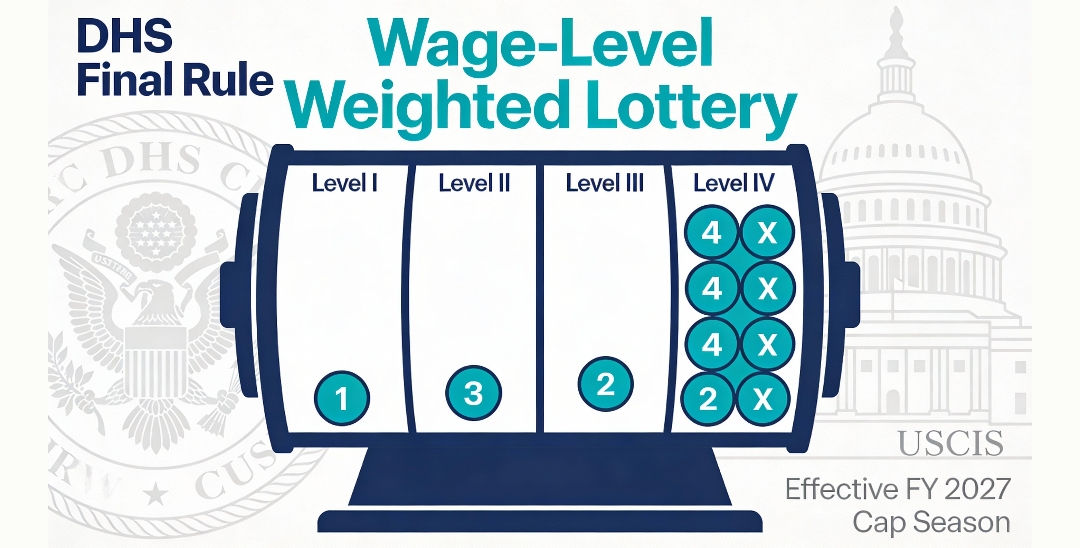
This new rule shifts the selection process from a random lottery to a wage-based weighting system using the Occupational Employment and Wage Statistics (OEWS) levels. This change favors higher-skilled, higher-paid workers while still preserving access for all levels of employment.
The weighted entries are as follows:
Level IV wages: 4 entries (61% chance)
Level III wages: 3 entries (45% chance)
Level II wages: 2 entries (31% chance)
Level I wages: 1 entry (15% chance)
This means that higher wages will lead to higher odds of selection. Entry-level roles remain eligible, but they will have a lower probability of being chosen.
Timeline Impact
The rule was filed for public inspection on December 23, 2025, with the Federal Register publication expected around December 29. The effective date aligns with the FY 2027 cap season, starting in March 2026. Employers should prepare their registrations with wage data tied to Standard Occupational Classification (SOC) codes and intended employment areas.
Strategic Advice for Employers
For H-1B clients, it is advisable to target Level IV and III offers to boost selection odds, especially given the high demand for skilled workers. Keep in mind that multiple registrations per beneficiary remain prohibited. Employers should monitor USCIS for guidance on wage documentation during the electronic registration process.
Practical Impact of the New Rule
A Level IV registration in an underserved or rural area will receive 4 entries in the lottery pool. This registration will outrank a Level I (1 entry) or Level II (2 entries) in a high-wage metropolitan city, even if the latter offers higher absolute salaries.
Wage Level Examples
For instance, a Level I position in San Jose-Sunnyvale-Santa Clara, CA, starts at $104,291 annually, which is in the 17th percentile locally. In contrast, a Level III position in areas like Mississippi or rural Midwest might range from $90,000 to $110,000. In San Francisco, median salaries can hit $172,802, often pushing even entry-level (Level I) positions above $130,000. This frequently outpaces Level III salaries in lower-cost regions like Eastern Oregon, where the median is $125,310 but adjusted lower for Level III.
Cross-Occupation Comparisons
Cross-occupation comparisons are irrelevant in this new selection process. For example, a Level IV family medicine physician in New York earning $280,000 and a Level IV programmer analyst at $150,000 both receive identical 4x weighting. The lottery does not consider the fact that the physician is paid nearly twice as much.
In underserved or non-metro locations, Level III and IV hires, whether in healthcare or technology, may gain a significant advantage in the lottery over high-paying but entry-level roles in coastal tech hubs, even if the latter offer higher salaries in absolute terms.
H-1B tech roles often benefit from fully or partially remote work, provided Labor Condition Applications (LCAs) cover the remote location. However, H-1B physicians in clinical roles typically must work on-site at approved medical facilities rather than fully remotely.
Conclusion: Weighing the Trade-offs
Like every progression, this weighted selection model comes with trade-offs. It better rewards higher wages but also risks sidelining early-career talent and mission-driven employers that cannot reach Level III or IV wage levels.
Large tech companies and high-paying employers may view this change as a positive development. However, hospitals and healthcare providers in underserved areas, startups, nonprofits, academia, and the public sector may face challenges. Young professionals and early-career talent could also be negatively impacted.
For further details, you can access the final rule to be published on December 29, 2025: Final Rule Document.
For updates on USCIS news, visit: USCIS News Releases.